
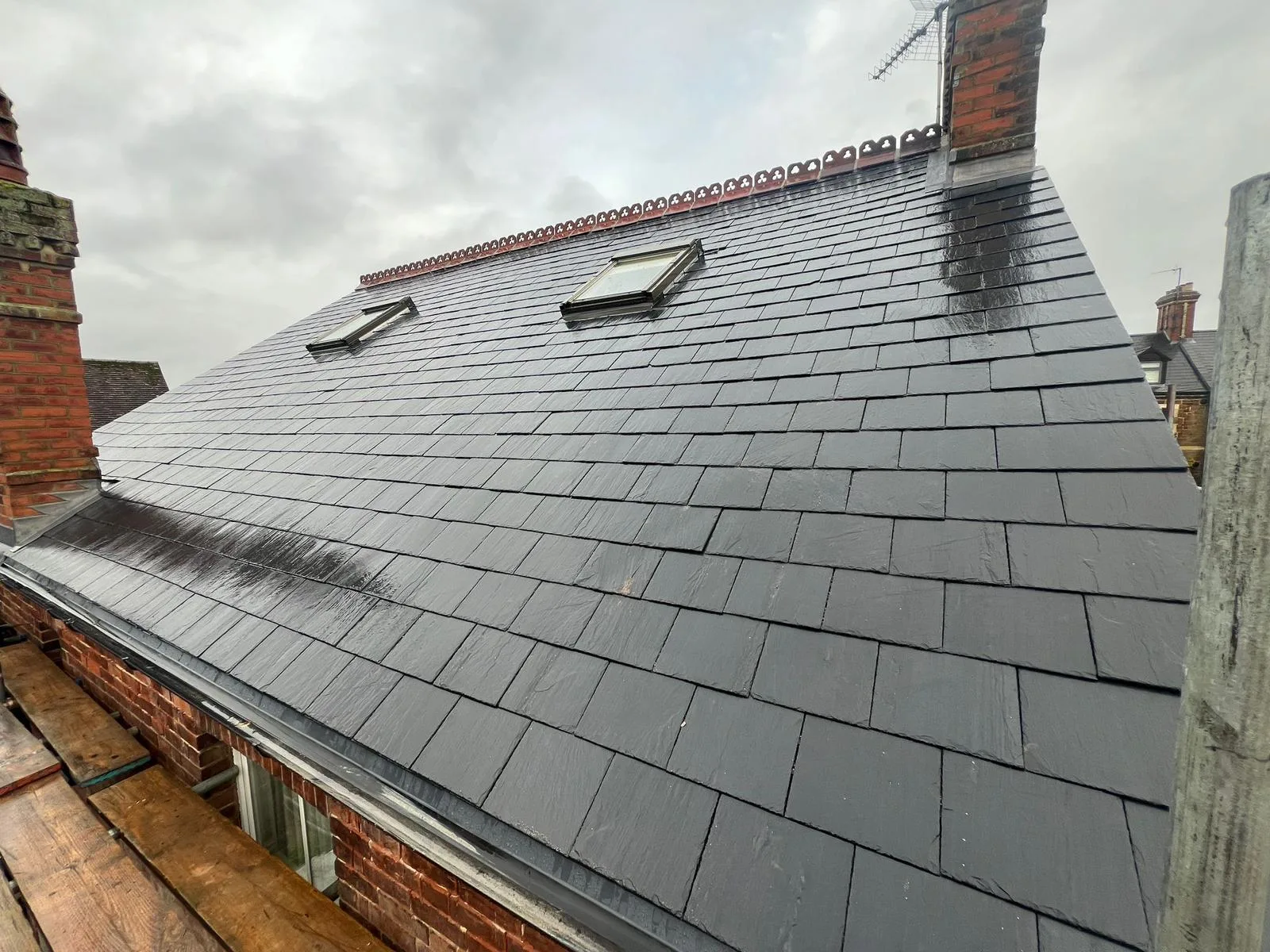
Almost every roofer will tell you a leak means a new roof, and almost every homeowner suspects that is not true. It usually is not. The question worth asking is not how old the roof is, it is whether what has failed has failed in one place or across the whole slope.
When a repair is the right answer
If the covering is sound and the problem is a specific thing that has broken, repair it. That covers most of what we get called to:
- One or two slipped or cracked tiles after a gale
- Lead flashing that has split along its fold at a chimney or abutment
- A blocked or split valley gutter backing water up under the covering
- Ridge tiles that have come loose where the mortar has cracked
- A flat roof on a back addition where the deck underneath is still solid
All of those are contained faults. Fix the fault and the roof carries on.
When a replacement is the honest answer
Two things change the calculation.
Nail sickness
Slate outlives the nails holding it by decades. Once the nails corrode through, slates start slipping in ones and twos across every slope rather than in one patch. At that point each repair buys a few months and you are paying for access every time. This is the single most common reason a genuinely good slate roof needs stripping and relaying, and the slate itself is usually fine to reuse.
Perished underfelt
On concrete tiled roofs from the 1960s onwards, the tiles routinely outlast the bitumen felt beneath them. The tiles look perfectly good from the road while the felt has gone brittle and torn between every rafter. You will see it as daylight, draughts and grit dropping into the loft insulation. No amount of work on top of the tiles fixes it.
How to get a straight answer
Ask whoever quotes you three things: what specifically has failed, whether it has failed in one place or generally, and what they expect to find when the covering comes off. Anyone who cannot answer the first two has not looked properly, and a roof cannot be assessed from the pavement.
Ask for photographs as well. We take them on every job, before and after, because it is the only way you can check work you will never climb up to see.